

Visite de Bordeaux
13 février 2020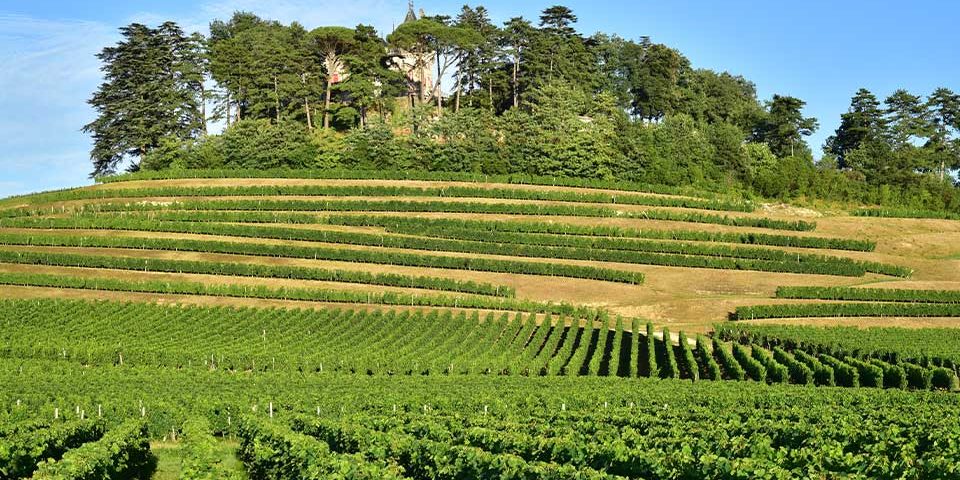
Three days. That’s all it takes — and all you need — to experience the very best of Bordeaux and its surroundings. From the golden reflections of the Garonne glancing off UNESCO-listed facades to the endless rows of vines stretching across the Médoc, and the turquoise waters of the Bassin d’Arcachon shimmering in the Atlantic light, this corner of southwest France offers a richness of experience that few regions in the world can rival. At Taste & Travel, we’ve been designing private programmes for discerning travellers for over a decade — people who want to go well beyond the standard tour bus circuit. This guide draws on our intimate knowledge of the region to offer a thoughtful, well-paced and truly memorable itinerary, always tailored to your tastes, your rhythm and your sense of adventure.
Why Choose Bordeaux for a 3-Day Break?
Bordeaux is far more than a wine destination. It’s a vibrant city of 260,000 people, inscribed on the UNESCO World Heritage List in 2007, with a food scene that has quietly become one of the most exciting in France — surrounded by a patchwork of wine terroirs that rivals anywhere on the planet. With three well-planned days, you can explore its many dimensions without ever feeling rushed, as long as your itinerary has been put together with care.
A UNESCO City Within Easy Reach: Architecture and Art de Vivre
Bordeaux’s historic centre is one of the finest examples of classical urban architecture in Europe. The Saint-Pierre quarter, the Cours de l’Intendance, the Rue Sainte-Catherine — France’s longest pedestrian street at 1.2 kilometres — and the sweeping riverside quays together create a setting that is both monumental and deeply alive. Neighbourhood markets, independent wine merchants, natural wine bars and Michelin-starred restaurants sit within a few streets of one another. That concentration of quality is exactly what makes Bordeaux so rewarding on a short trip.
Bordeaux, Wine Capital of the World: What the Numbers Tell Us
The Bordeaux wine region covers around 120,000 hectares across more than 60 appellations. Around 700 million bottles are produced here every year, shipped to over 170 countries. But the statistics only tell half the story. What truly sets Bordeaux apart is its extraordinary stylistic range: from the age-worthy reds of the Médoc and the honeyed sweetness of Sauternes, to the crisp dry whites of Pessac-Léognan and the velvety, merlot-driven wines of Saint-Émilion. Three days will let you explore at least three distinct expressions of this diversity — ideally with a local expert by your side.
Day 1 — Bordeaux City: Landmarks, Markets and Your First Tasting
The first day belongs entirely to the city. Many travellers rush straight to the vineyards and give Bordeaux itself short shrift. Don’t make that mistake. The city deserves a full day — and rewards it.
Morning: The Golden Triangle and the Place de la Bourse
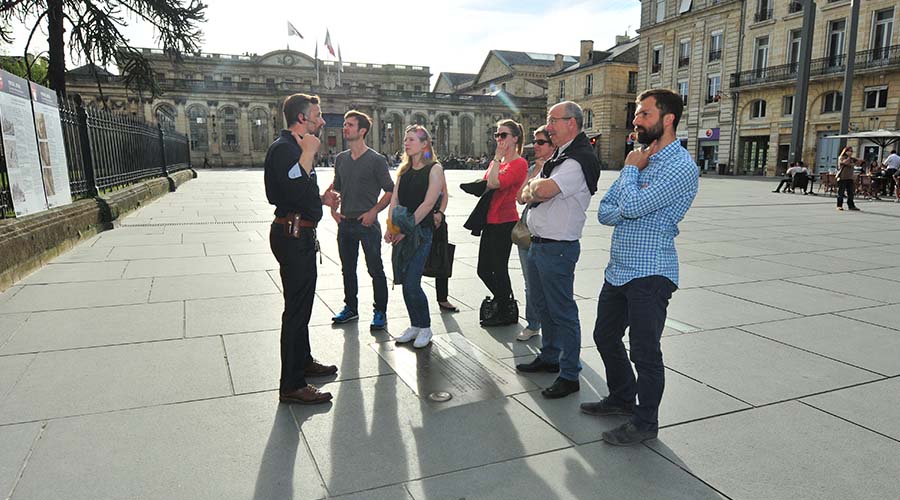
Start in the heart of the Golden Triangle, the elegant district framed by the Cours de l’Intendance, Cours Clémenceau and Cours Alsace-Lorraine. In the early morning, café terraces are just opening and the honey-coloured stone facades catch the light at their most beautiful. Head down to the riverside to discover the Place de la Bourse and its legendary water mirror — the world’s largest reflective surface, covering 3,450 square metres, alternating between a perfect mirror and a billowing mist curtain. From here, walk to the Marché des Capucins, known as « the belly of Bordeaux », for a first taste of the region: oysters from the Bassin d’Arcachon, foie gras, local cheeses, and the city’s inimitable morning energy.
Lunch: Canelés, Oysters and the Bordeaux Bistro Tradition
Lunch is the moment to settle into the Bordelais way of eating — unhurried, convivial and rooted in excellent local produce. The Saint-Pierre quarter and the Chartrons neighbourhood — the latter a former hub of the wine trade, now home to a lively creative restaurant scene — both offer excellent options. A few dishes you simply shouldn’t leave Bordeaux without trying: freshly shucked oysters from Marennes-Oléron or the Bassin, paired with a crisp Bordeaux Blanc; entrecôte bordelaise with its classic shallot-and-bone-marrow sauce; and of course the canelé, that small, rum-and-vanilla-scented caramelised pastry that has been made in the city’s convents since the 18th century. Taste & Travel is happy to recommend and reserve the right table for your profile and dietary preferences.
Afternoon: La Cité du Vin — an Unmissable Immersive Experience
Opened in 2016, La Cité du Vin has established itself as one of France’s most-visited cultural attractions, drawing over 400,000 visitors a year. The building itself — a fluid, spiralling structure designed by XTU Architects — is a statement piece on the banks of the Garonne, evoking the swirling of wine in a glass. Inside, the permanent collection takes visitors on a sensory and cultural journey through wine across nineteen different themes, exploring everything from ancient civilisations to contemporary wine culture through interactive, immersive installations. At the very top, the belvedere terrace offers a sweeping 360-degree panorama over the city, the Garonne’s broad curves and, on a clear day, the first low ridges of vineyard beyond the urban horizon. The visit ends with a tasting included in the entrance ticket. Allow two to three hours to do it justice.
Evening: dinner at leisure in the Chartrons quarter, or at a restaurant our team will have handpicked for you. Overnight in Bordeaux.
Day 2 — A Private Tour of the Vineyards: Médoc or Saint-Émilion?
Day two is the centrepiece of the trip for wine lovers. Two major routes await — and the choice between them says something about who you are as a traveller. Here is our honest assessment to help you decide.
The Châteaux of the Médoc: Grand Crus and Exclusive Tastings
The Route des Châteaux through the Médoc is one of the most spectacular wine roads in the world. It runs for nearly 80 kilometres from the outskirts of Bordeaux up to the Pointe de Grave, threading past estates of extraordinary architectural variety — from the flamboyant neo-Indian towers of Cos d’Estournel to the serene, colonnaded elegance of Château Margaux. The single commune of Pauillac is home to three of the five Premiers Grands Crus Classés of the 1855 classification: Mouton Rothschild, Latour and Lafite Rothschild. A well-constructed day in the Médoc typically takes in two or three properties, with tastings and cellar tours adapted to your level and interests. Through its network of partner estates, Taste & Travel is able to arrange visits outside standard opening hours, in intimate small-group or fully private settings — in the barrel cellars, among the vines, or at the winemaker’s table. This is a fundamentally different experience from a standard tourist visit.
Our Taste & Travel recommendation for a tailored Médoc day: a morning at a family-owned estate for a hands-on introduction to the terroir, lunch at the château restaurant or a local village bistro, followed by an afternoon at a more celebrated appellation with a vertical tasting if the mood takes you.
Saint-Émilion: Medieval Village, Cave Cellars and Pomerol
On the right bank of the Dordogne, about 40 kilometres east of Bordeaux, Saint-Émilion offers an entirely different wine experience. The hilltop village — UNESCO-listed in its own right since 1999 — is among the most beautiful in France: cobbled lanes, sun-drenched terraces, Romanesque bell towers and cellars carved directly into the limestone rock beneath the streets. The wines here, dominated by merlot with cabernet franc, tend to be rounder and more approachable in youth than the structured reds of the Médoc. The appellation’s 18 Premiers Grands Crus Classés include two at the very pinnacle, the « A » tier — Cheval Blanc and Ausone — widely regarded among the greatest wines on earth. Fifteen minutes away, the tiny plateau of Pomerol, without any official classification but with a legendary reputation, is home to Pétrus: a handful of blue clay hectares that produce one of the world’s most sought-after and expensive wines.
Why Choose a Private Guide Over a Group Tour?
The difference isn’t simply about comfort. A private guide with genuine wine expertise changes the entire nature of the experience. On a group tour, the programme is standardised, tastings are calibrated to the lowest common denominator, and real conversations with winemakers are rare. With Taste & Travel, your guide shapes every visit around your profile — your favourite styles, your level of knowledge, your dietary needs — and their relationships within the châteaux open doors that remain firmly closed to the general public: library vintages, private barrel rooms, family dining rooms. And travelling by private vehicle means you can taste freely and completely, without a thought for the drive home.
Return to Bordeaux in the late afternoon. Dinner at a restaurant celebrating the food and wine pairings of the region.
Day 3 — The Bassin d’Arcachon: Dune du Pilat, Oysters and the Atlantic
Less than an hour from Bordeaux by road or train, the Bassin d’Arcachon offers a striking contrast to the previous two days. Here it’s all Atlantic light, pine forests, tidal flats and oyster farmers. It’s the kind of day that restores something — and it rounds off a Bordeaux stay beautifully.
The Dune du Pilat: Sunrise and an Extraordinary Panorama
The Dune du Pilat is the tallest sand dune in Europe: 107 metres high, 500 metres wide and nearly three kilometres long. Every year it advances several metres inland, slowly absorbing the pine forest at its foot. From the summit, a single sweeping view takes in the Landes forest to the east, the open Atlantic to the west, and to the north, the Bassin d’Arcachon spread out below with its oyster beds and tidal channels catching the light. The climb — fifteen minutes on the wooden ramp or the carved sand steps — earns you a panorama of an unexpectedly vast and moving scale. Go early in the morning or in the late afternoon, when the golden hour light turns the sand shades of amber and rose.
Oyster Tasting With a Local Producer
The Bassin d’Arcachon is one of France’s leading oyster-producing areas, bringing between 8,000 and 10,000 tonnes of Pacific oysters to market each year. The oyster villages scattered along the Bassin’s shores — Le Canon, L’Herbe, Piraillan, Claouey — have kept a rare, unhurried authenticity: brightly coloured wooden cabins on stilts, flat-bottomed boats rocking gently on the tide, a sense of being at the edge of the known world, minutes from the tourist beaches. A tasting directly with a producer — at a rough wooden table with your feet in the gravel, a dozen freshly shucked oysters in front of you and a glass of crisp Bordeaux Blanc or Entre-Deux-Mers in hand — is one of those quietly perfect experiences that Taste & Travel loves most. We select producers who take genuine pleasure in sharing their craft and their story.
After lunch, a leisurely walk along the beaches of La Teste-de-Buch or Arcachon depending on the season, then a transfer back to Bordeaux or directly to the airport.
Practical Information for Planning Your Bordeaux Trip
When Is the Best Time to Visit Bordeaux?
Bordeaux rewards visits year-round, but the most satisfying seasons for combining city exploration, vineyard visits and the Atlantic coast are spring (April to June) and autumn (September to October). The harvest season — typically mid-September to late October — brings a particular electricity to the châteaux, with the possibility of watching the vendange in action. Summer is warm and vibrant, though the most popular sites — Saint-Émilion and the Dune du Pilat in particular — can become very busy.
Getting Around
For vineyard days and the Bassin d’Arcachon, a private vehicle with chauffeur is by far the most comfortable and practical solution — and the only sensible one when serious tasting is on the agenda. Bordeaux itself is easily navigated on foot or by tram. The city is superbly connected by TGV from Paris (around two hours) and its international airport offers direct flights from many European cities.
Where to Stay
We generally recommend basing the whole trip in Bordeaux, at a characterful hotel in the city centre or the Chartrons neighbourhood. For travellers seeking total immersion in wine country, we can also arrange rooms at wine estates in the Médoc or Saint-Émilion — an experience that adds an entirely different dimension to the stay.
FAQ — Common Questions About a 3-Day Bordeaux Trip
What should I do in Bordeaux in 3 days?
In three days in Bordeaux, you can explore the UNESCO-listed historic centre (Place de la Bourse, the water mirror, La Cité du Vin, local markets), devote a full day to the surrounding vineyards — Médoc or Saint-Émilion depending on your preference — and end with a restorative day at the Bassin d’Arcachon. With Taste & Travel, every element of this programme is personalised, and our local network ensures access to experiences that simply aren’t available off the shelf.
Médoc or Saint-Émilion: which should I choose for a wine day?
It really comes down to what draws you. The Médoc is about grand châteaux, storied estates and structured, age-worthy reds in a landscape of sweeping, low-horizon vines. Saint-Émilion offers a medieval village, intimate cave cellars and wines — predominantly merlot — that are often more approachable in their youth. Taste & Travel can help you make the call through a brief conversation before your trip, taking into account your palate, the season and your prior experience with Bordeaux wines.
Is it better to stay in Bordeaux city or Saint-Émilion for a 3-day trip?
For a three-day itinerary covering the city, the vineyards and Arcachon, we recommend basing yourself in Bordeaux: better connected, more varied for evening dining, and a natural hub for day trips in any direction. Saint-Émilion makes an excellent base if your entire focus is on the right bank wine country and you want to wake up among the vines.
How do I book a private wine tour in the Bordeaux vineyards?
Get in touch with our team through the programme request form on the Taste & Travel website. We’ll arrange a first conversation — by phone or video call — to understand your expectations, travel dates and budget, then come back to you within 48 hours with a detailed, personalised proposal. Our private tours run year-round for groups of 2 to 12 people, in English, French or Spanish.
Ready to Design Your Bordeaux Programme?
Every Taste & Travel experience is an original. If this itinerary speaks to you, our experts are ready to shape it around your exact wishes, your dates and your budget.
→ Request your tailor-made programme | → Explore all our Bordeaux and Gironde itineraries
Written by the Taste & Travel team — private guides and wine tourism specialists in Bordeaux for over ten years. Every recommendation in this article comes from direct field experience and our carefully maintained partnerships with local producers, chefs and hospitality professionals.